Image
The International Criminal Court (ICC) in The Hague has faced major challenges in the past year. This article looks back at the experiences of the International Criminal Tribunal for the Former Yugoslavia (ICTY) and how (inter)national political will and a change in leadership transformed a seemingly paralysed court into a functioning instrument of justice. While history has shown that the road to accountability will be long, chances are that the ICC will succeed - if only it receives enough support.
Ever since the International Criminal Court (ICC) issued arrest warrants for individuals indicted for war crimes related to the war in Ukraine and the occupation of Gaza, the Court and its staff have faced mounting pressure—well beyond the bounds of normal criticism. Chief prosecutors have endured personal threats, blackmail, and intense political backlash, underlining the shift that has taken place in the world around international justice.
Yet, this is not the first time an international tribunal has operated under pressure and criticism. In the 1990s, the International Criminal Tribunal for the Former Yugoslavia (ICTY) was confronted by a similarly hostile environment. Initially underfunded and without political backing, it nonetheless showed itself successful in holding war criminals accountable, including a sitting head of state.
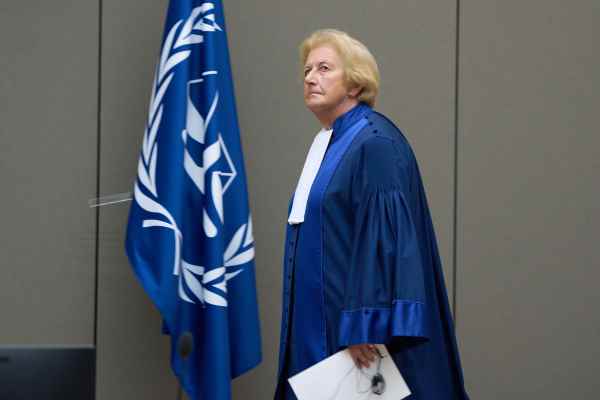
Judge Joanna Korner enters the ICC court room during the trial against Ali Muhammad Ali Abd-Al-Rahman, who is accused of committing war crimes in Darfur, December 2025. Foto ANP, Peter Dejong
This article argues that despite the growing pessimism surrounding the ICC, its challenges are not unprecedented. Drawing on the experience of the ICTY, this article illustrates how long-term political will, strategic operational design and leadership can transform a seemingly paralysed court into a functioning instrument of justice. While history has shown that the road to accountability will be long, there is also reason to assume that the ICC will succeed.
Indeed, even though the ICTY faced much criticism when it issued its first arrest warrants after the war in ex-Yugoslavia, there is more than enough evidence to show that the process was successful in the end. Many who committed war crimes during the war in Bosnia, finally faced trial in The Hague: the ICTY indicted 161 individuals, of whom 93 received a sentence.[1] The ICTR (the International Criminal Tribunal for Rwanda) even concluded proceedings for 82 accused persons, out of the 93 indicted individuals.[2] Both courts thus showed that it was possible to bring war criminals to justice – and laid the groundworks for the ICC.[3]
The arrest warrants
Since Russia’s war of aggression in Ukraine, the ICC has issued several arrest warrants, including for President Vladimir Putin and Maria Lvova-Belova. With Ms Lvova-Belova being the Commissioner for Children’s Rights in the Office of the President, she is one of the main persons charged for the large-scale unlawful deportations of Ukrainian children to the Russian Federation.[4] Further indictments were issued against Sergei Kobylash and Viktor Sokolov, two high-ranking officers of the Russian Army. Each of them are allegedly responsible for the war crime of ‘directing attacks at civilian objects and of causing excessive incidental harm to civilians or damage to civilian objects, and the crime against humanity of inhumane acts.’[5]
While the ICC could not issue warrants that were directly linked to the Russian invasion as Russia has never recognised the ICC’s authority, the ICC’s legal jurisdiction in Ukraine is grounded in formal declarations made by the Ukrainian government. Although Ukraine is not a party to the Rome Statute, it has twice accepted the Court’s jurisdiction—first in November 2013 and again in 2015—specifically authorizing the ICC to investigate alleged crimes committed on its territory from 2013 onward. This includes war crimes, crimes against humanity, and potentially the crime of aggression. This legal basis enabled the ICC Prosecutor to open a formal investigation into the situation in Ukraine, leading to the issuance of the arrest warrants.
Similarly, right after the 7 October 2023 Hamas attack on Israel, the ICC Pre-trial Chamber issued warrants of arrest for several senior Hamas leaders, including for Mohammed Diab Ibrahim Al-Masri, commonly known as ‘Deif’, the highest commander of the military wing of Hamas (known as the al-Qassam Brigades), for – among other charges – the crimes against humanity of murder, extermination, torture and rape.[6] These charges were dropped when it was confirmed that the leaders had been killed during Israeli airstrikes. Israeli Premier Benjamin Netanyahu and former Minister of Defence Yoav Gallant, on the other hand, are still wanted for crimes against humanity and war crimes committed from at least 8 October 2023 onward.[7]
In the case of Gaza and the broader Israeli-Palestinian conflict, quite similarly as for Ukraine, the ICC’s jurisdiction stems from Palestine’s accession to the Rome Statute in 2015. As a recognized State Party, Palestine granted the ICC jurisdiction over crimes committed on its territory, including the West Bank, East Jerusalem, and Gaza. This legal recognition enabled the Office of the Prosecutor to open a formal investigation into potential war crimes and crimes against humanity committed by both Israeli and Palestinian actors. Despite international backlash and political pressure, the legal foundation of the ICC’s jurisdiction remains solidly based on treaty law and prior judicial decisions by the Pre-Trial Chamber.[8]
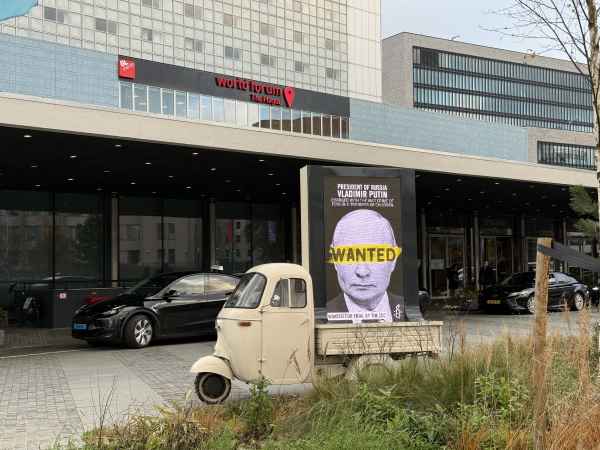
A billboard calling for the arrest of Russian leader Vladimir Putin is placed outside the venue hosting the 24th session of the ICC Assembly of States Parties in The Hague, Netherlands, on December 4, 2025. Foto ANP/Anadolu, Selman Aksunger
While the indictments were immediately cited in news outlets, the news was often paired with feelings of disbelief and criticism. The ICC’s indictments were accused of being merely a political statement. Since the 2024 election of American President Trump, however, this criticism has exploded into funding cuts, boycotts, but also outward blackmailing and threats towards to main prosecutors.[9]
When we look at what was needed in the past to ensure its effectiveness, we can draw parallels with what will be needed now to actively support the ICC. These factors boil down to: political will, feasibility and leadership, and regime change.
Political will was key in the 1990s – and it will be needed again
One of the ICC’s most significant obstacles today is securing consistent international political support. This is, however, not a new problem. In 1996, a full year after the war in Bosnia ended, the ICTY’s courtroom remained empty. Despite having issued arrest warrants, none of the suspects had been brought in.
National law enforcement agencies in the former Yugoslav states refused to cooperate, often sheltering suspects instead of apprehending them. Political support to bring war criminals to justice was extremely low in those years. ICTY President Antonio Cassese even called for sanctions against Serbia and other non-cooperative states. Yet, political momentum remained largely absent.[10] Despite elaborate efforts from then Dutch Minister of Defence Voorhoeve in the North-Atlantic Council to call for a more active policy to apprehend war criminals, there was not much political backing at the time.[11]
Initiating such specific arrests had proved to be impossible in the year before (during the IFOR mission) as i) soldiers needed specific training for such arrests, and was thus preferably done through a special forces operation, ii) the risks to the overall peace process and the stabilisation mission in Bosnia were deemed too high and iii) division and battalion commanders could not yet estimate the reaction of the local population and thus the risks to their own troops if such operations were carried out. Indeed, too many countries had been, and would continue to be too risk-averse to engage in such high-risk operations. This meant that many countries who contributed to IFOR and SFOR, often remained fully against such secret operations in their area in Bosnia.[12]
It was only in 1997, when key leadership positions and thus policies changed, that Voorhoeve could count on more international political backing. Madeleine Albright (nicknamed the ‘Bosnia Hawk’) was appointed as the new US Secretary of State, and Tony Blair as the new British Prime Minister in 1997, which paved the way for a more active and offensive policy in Bosnia – including a more active stance against the war criminals that were still roaming around in the region. Several countries explored the possibility of organizing joint special operations, but intelligence sharing within these coalitions proved to be too difficult.[13] Hindered by intelligence sharing issues, but backed by growing political will, the Netherlands and the UK initiated their own secret national operations to arrest indicted war criminals with special forces teams.
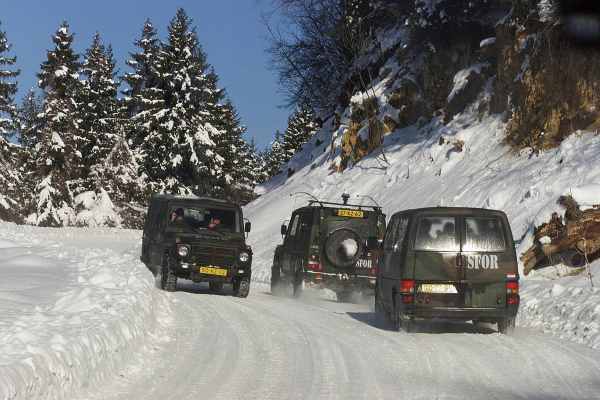
Besides routine SFOR surveillance several contributing nations—most notably the Netherlands and the UK—executed covert operations to capture indicted war criminals. Photo Beeldbank NIMH
The arrests: feasibility and leadership
Similar to the ICTY, the ICC does not possess its own enforcement arm and therefore relies on states and international organizations to carry out arrests. As demonstrated in the recent case of former Philippine President Rodrigo Duterte, one option for the ICC is to coordinate with organizations such as Interpol to detain individuals indicted for war crimes and facilitate their transfer to The Hague.[14]
Another viable approach is the use of special operations. This method was employed during the NATO-led SFOR mission in Bosnia, with several contributing nations—most notably the Netherlands and the UK—executing covert operations to capture indicted war criminals.
However, such operations were not universally supported. The decision to conduct them depended heavily on political will and local conditions. In the Republika Srpska, where the Nordic-Polish Brigade was stationed, the environment was often too hostile for these missions. Local war criminals were revered by the local population to such an extent that it would be dangerous for the NATO military to catch them. Even if done through special operations, it was feared to instigate the same effect. Some countries even introduced procedural barriers to avoid involvement. Denmark, for example, required lengthy military approvals to arrest war criminals, which effectively rendered contributions to arrest efforts unworkable.[15] Certain regions simply remained too unstable for these operations to proceed safely.
Reversely, the Dutch and British-controlled areas were more stable and low-risk, enabling them to carry out arrests with precision. Special forces who had been training under strict secrecy were flown into Bosnia just days before their mission. These efforts resulted in the successful capture of Milan Kovačević and Simo Drljača during the UK-led Operation Tango in 1997.[16] Both were charged with complicity in genocide in Prijedor. Later that year, Dutch forces launched Operation Foxtrot, arresting Vlatko Kupreškić and Anto Furundžija for war crimes in the Lašva Valley.[17] When they were flewn in into The Hague, it was the very first time for the ICTY to work on a case that dealt entirely with charges of sexual violence as a war crime – serving as an important precedent for future cases.[18]
Though initially met with local backlash towards the local Dutch and British troops —including attacks on NATO bases and heightened local hostility—the tension quickly subsided.[19] Military reports and interviews later confirmed that the arrests helped stabilize the region and facilitated refugee returns. The operations reaffirmed the principle that sustainable peace is not possible without accountability for war crimes.
These missions also highlighted the importance of operational discretion. The ICTY often circulated the names of indicted individuals only on a need-to-know basis to prevent suspects from fleeing. This practice appears to continue today, as seen in Duterte’s March 2025 arrest, which followed a sealed warrant issued just one day prior. Because of this, it is likely that the ICC holds additional sealed indictments in relation to Ukraine and Gaza as well.
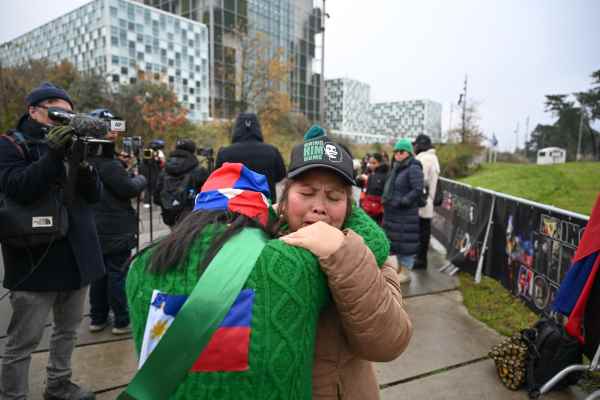
Supporters of former Philippine President Rodrigo Duterte demonstrate for his release near the ICC building in The Hague, November 2025. Foto ANP, Mouneb Taim
These successful early arrests fostered greater political will. The appointment of Lord George Robertson as NATO Secretary-General in 1999 marked a shift toward greater engagement with international justice. NATO’s rules of engagement were expanded, enabling local commanders to act on arrest warrants. At the same time, ICTY Prosecutor Louise Arbour for the first time in history charged a sitting head of state: President Slobodan Milošević of the Federal Republic of Yugoslavia.
Catching the big fish requires regime change
It remains unlikely that high-profile figures like Putin or Netanyahu will be apprehended while in power or within their home territories. Although technically possible to arrest them abroad, few states are currently willing to risk diplomatic fallout by doing so.
Yet, history suggests that these arrests become possible from the moment regimes collapse. When Prosecutor Arbour indicted Milošević in May 1999, many viewed the move as politically reckless. She was confronted with criticism from diplomats and the press, as it was believed that the process would become a failure, and only exacerbate the fragile situation in the region.[20] However, only a year later, mass protests in October 2000 forced Milošević from power. Already imprisoned on corruption charges, he was handed over to the ICTY in mid-2001 by his own Yugoslav authorities – after his regime had been toppled from the inside. His legal file was by then ready and waiting at the Court.[21] The notion that such an arrest would never succeed, became quickly outdated.
Important to note here is that, by turning in Milošević to the Court in The Hague, his political influence in Belgrade was severely diminished. It gave the winning party after the presidential election in 2000 the chance, with the backing of the EU, to consolidate its power and new direction of politics.[22] Arresting Netanyahu could have similar stabilising effects on the Israeli government if he would be handed over to the ICC.
However unlikely this may sound at this moment of writing, regimes can fall – and they can fall quickly. And more importantly, this happens often quite unexpectedly. The case of Milošević, or the recent collapse of Syria’s Bashar al-Assad’s government underscore this point. A similar sequence is conceivable in Russia or Israel. Analyst Joris van Bladel, for example, noted that during the Wagner Group’s advance toward Moscow in 2023, local support for the group hinted at possible future upheaval.[23] Moreover, it is still difficult to assess how many Russians civilians actively support the war. In Israel, Prime Minister Netanyahu’s grip on power is slipping. In July 2025, Israeli Defense Minister Israel Katz and multiple military leaders openly rejected recent plans for a Gaza humanitarian camp.[24] Only a few days later, on July 15, 2025, an ultra-Orthodox party exited Netanyahu’s coalition over a military draft bill—leaving the government vulnerable, as it left Netanyahu with just a one-seat majority in the Knesset.[25]
The current effects of the ICC and the way forward
Those who claim the ICC’s indictments lack real-world impact overlook key developments. Media outlets regularly cite the warrants against both Putin and Netanyahu. Putin’s international travel is now severely limited, while Netanyahu rerouted his trip to Washington in February 2025 to avoid jurisdictions that might detain him.[26]
Some EU countries stated they would not arrest Netanyahu during stopovers—statements that triggered widespread public backlash. These stances have slowly been shifting in the past months, as public pressure grew exponentially. The growing criticism and public outrage has placed reputational constraints on indicted leaders and shifted the dialogue toward future accountability. The effect of the indictments on the international stage can hardly be overstated.
While the current U.S. administration has actively opposed the ICC and even threatened some of its main functionaries, it is important to remember that the US has no direct control over the Court, it is not a member of the Court and does not fund the Court. Under President George W. Bush, the treaty was ‘unsigned’ by the US in 2002, and laws were implemented to prevent cooperation with the ICC. The US’s relationship with the ICC has always been selective, if not non-existent. Meanwhile, more than 120 signatory states continue to support the ICC financially – but should remember to support the court politically as well.
Diplomatic resistance and domestic turmoil may delay prosecutions, but the ICC is not powerless. Its greatest asset is time: the ability to build strong cases, store detailed evidence, and prepare for the right political moment. The ICC, patient and persistent, will have its cases ready when the moment is there.
[1] 'Key Figures – Cases’, International Criminal Tribunal for the former Yugoslavia (ICTY).
[2] Key Figures – Cases’, International Criminal Tribunal for Rwanda (ICTR).
[3] Frank Hofmann, ICC 30 years after Yugoslavia: From Milosevic to Putin, 25 May 2023.
[4] They are accused of having unlawfully abducted and deported at least, but probably more than, 19,500 Ukrainian children to the Russian Federation. This mass deportation is often combined with ‘re-education programmes’ and forced adoption in Russia. Ukrainian Children Deported to Russia: Plenary Debate’, European Parliament, 11 March 2024.
[5] ‘Situation in Ukraine: ICC Judges Issue Arrest Warrants Against Sergei Ivanovich Kobylash and Viktor Nikolayevich Sokolov’, International Criminal Court, 5 March 2024.
[6] The Prosecution had initially filed applications for warrants of arrest for two other senior leaders of Hamas, namely Ismail Haniyeh and Yahya Sinwar. Following confirmation of their deaths, the Chamber granted the withdrawal of the applications on 9 August 2024 and 25 October 2024, respectively. As Deif’s death has not been confirmed, his warrant of arrest still stands. After confirmation of Deif’s death last year, the ICC cancelled his arrest warrant as well.
[7] ‘Situation in the State of Palestine: ICC Pre-Trial Chamber I Rejects the State of Israel’s Challenges to the Court’s Jurisdiction’, International Criminal Court, 9 August 2024.
[8] ‘Palestine’, International Criminal Court.
[9] ‘Verenigde Staten vs. Rechters Internationaal Strafhof: Sancties’, VRT NWS, 6 June 2025; ‘International Criminal Court Deplores New Sanctions by US Administration Against ICC Officials’, International Criminal Court, 6 June 2025; ‘Topjurist van Internationaal Strafhof Stapt op na Dreigementen VS en Israël: ‘Het Waren de Zwaarste Maanden van Mijn Leven’’, De Morgen, 7 June 2025.
[10] SIB-Def, Archief Missies 1293, SHAPE Belgium ‘IFOR Support to the High Representative, ‘8 May 1996; Margaret Lee, Raphael Perl and Steven Woehrel, CRS Report for Congress: Bosnia War Crimes: The International Criminal Tribunal for the Former Yugoslavia and U.S. Policy (Washington, D.C., The Library of Congress, 1998).
[11] Archief Buitenlandse Zaken, ddi-dvb, ISN 516509, dvb/cv/joegoslavie/navo. Ambassade Lissabon voor minister BZ, verklaring van de minister tijdens ministeriële NAR in Sintra, 29 May 29, 1997.
[12] Elke Boers, ‘Whose security are we here for? Dutch security considerations during the IFOR and SFOR peace operations in Bosnia, 1995-2004,’ PhD Dissertation, Groningen University, 2024.
[13] Esther Bootsma, Kijk niet weg. De missie van generaal Patrick Cammaert (Amsterdam, Atlas Contact, 2019).
[14] ‘Filipijns Oud-President Duterte Geland in Nederland en in Handen van Internationaal Strafhof’, VRT NWS, 12 March 2025.
[15] Jakob Rasmussen, ‘After All There Was War and There Is No Such Thing as the Perfect Solution.’ PhD Dissertation, Royal Danish Defence College, 2001.
[16] Operation Tango, see: Elite UK Forces.
[17] NIMH Collectie vredesoperaties, SFOR rapportages (3), Contco 16 nov 97–31 dec 97. SITREP 97/351, December 18, 1997; International Justice Resource Center, ‘Furundžija,’ ICTY. Archief Buitenlandse Zaken, ddi-dvb ISN 569670, aim 00150, dbv/cv/joegoslavie/navo. Monthly report to the UNSC on SFOR operations from Javier Solana, August 7, 1997; Archief Buitenlandse Zaken, ddi-dvb, ISN 516504, aim 01329, dvb/cv/joegoslavie/navo. Memorandum van DVB aan DGPZ, SFOR aanhouding verdachten van oorlogsmisdaden/reacties bondgenoten, July 18, 1997.
[18] ‘Prosecutor v. Kupreskic,’ ICTY, 14 January 2000. See: https://www.icty.org/x/cases/kupreskic/tjug/en.
[19] Archief Buitenlandse Zaken, Archief ddi-dvb ISN 516504, aim 01329, dvb/cv/joegoslavie/navo. Meeting of the SG with the Presidency of the Republic of BH, Sarajevo, 19 December 1997.
[20] ‘Statement by Louise Arbour on the Indictment of Slobodan Milošević for Crimes Against Humanity,’ U.S. Department of State, 27 May 1999.
[21] ‘Weighing the Evidence. Lessons from the Slobodan Milošević Trial,’ Human Rights Watch, December 2006. Milošević trial grips nation, IWPR Balkan crisis report, 318, 15 February 2002.
[22] Norman Cigar and Paul Williams, Indictment at the Hague. The Milošević Regime and Crimes of the Balkan Wars (NYU Press, 2002) See also: T. Forsberg and T. Teivainen, Past Injustice in World Politics. Prospects of Truth-Commission-Like Global Institutions. Helsinki: Crisis Management Initiative, 2004.
[23] ‘Militair Expert Joris van Bladel over Waarom de Russische Maatschappij een Ver-van-mijn-bedshow Is: ‘Geen Enkele Rus Wil het Leger In’’, De Morgen, 14 juni 2024.
[24] Bethan McKernan, ‘Israeli Government Orders ‘Must Not Be Obeyed,’ Say IDF Intelligence Officers,’ The Guardian, 11 June 2025.
[25] Maayan Lubell, ‘Netanyahu in Tight Spot after Party Quits Israeli Coalition’, Reuters, 15 July 2025.
[26] Safia K. Southey, ‘Duterte, Netanyahu, and Putin: The ICC’s Power Play’, Opinio juris, 17 April 2025.